
The Mathematics of Intent — Why Bayesian Inference is the Future of Fashion Retail
Introduction: The Death of the “Average” Customer In the world of independent fashion and footwear, the “average” customer is a myth—a statistical ghost that doesn’t

Introduction: The Death of the “Average” Customer In the world of independent fashion and footwear, the “average” customer is a myth—a statistical ghost that doesn’t

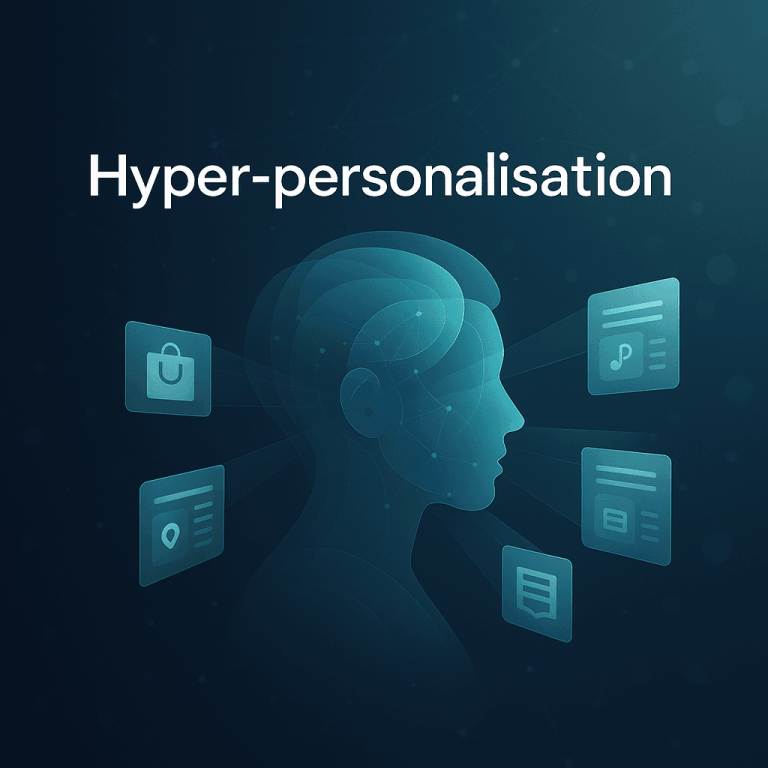
Hyper-personalisation is when a brand or product doesn’t just treat you like “a segment” (like, female 25 to 34 in London who likes fitness). It

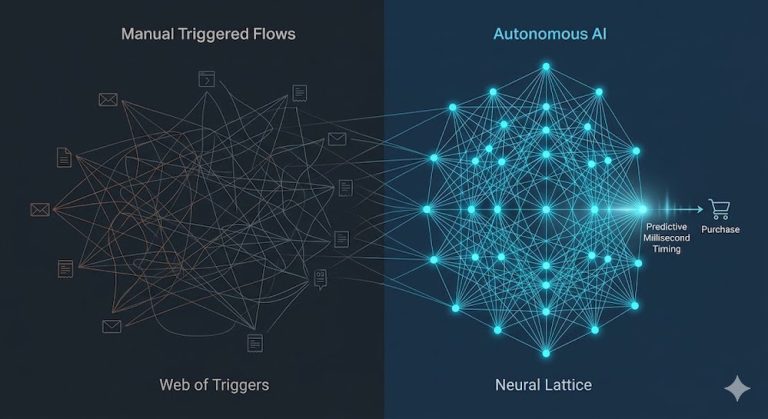
In the modern e-commerce stack, “Triggered Solution Marketing” (Klaviyo-style flows) and “Segmentation” (defining rules) have long been hailed as the gold standard. They were the

If your entire 2026 ecommerce strategy relies on a customer clicking a link and visiting your beautiful, responsive website, your business is already a zombie.

Why traditional marketing metrics fail — and what should replace them For more than two decades, email marketing performance has been measured using campaign-centric metrics

Introduction: The Death of the “Average” Customer In the traditional ecommerce stack, the “customer” is a static data point. They are categorised into broad segments:

In the boardrooms of most ecommerce brands, the website is treated as the sun around which the customer orbits. Millions are poured into on-page optimisation,

For the modern ecommerce director, the “Discount” has become a dangerous addiction. When sales dip, the knee-jerk reaction is to trigger a 20% off site-wide

Most “Product Recommendation” engines are lazy. They use “Collaborative Filtering” (People who bought this also bought that). This ignores the individual’s current “State of Mind.”

In the fast-paced world of digital marketing, the strategies that once drove success can quickly become obsolete. One such relic of the past is the

The series opened with a rigorous cost and performance analysis comparing autonomous ML hyper-personalisation against segmented and triggered email. Subsequent articles examined the data architecture

Transitioning from a segmented email programme to an autonomous ML personalisation system is not a single project with a defined start and end date. It

Fashion ecommerce occupies a uniquely complex position in the personalisation landscape. No other product category combines such rapid trend cycles, highly subjective consumer preferences, significant

The conversation about hyper-personalisation in ecommerce too often unfolds as if privacy and personalisation are inherently in tension — as if the price of knowing

Return on investment in email marketing is frequently measured shallowly: open rates and click-through rates dominate dashboards, while the metrics that actually drive business outcomes

Autonomous hyper-personalisation does not emerge from a single clever algorithm. It is the product of a carefully engineered data architecture — a layered infrastructure that

Every vendor in the email personalisation market claims to offer personalisation. The word has been stretched so far across so many products — from simple

In today’s digital era, email remains one of the most powerful channels in a marketer’s toolkit. With saturated inboxes and increasing consumer expectations, simply sending