winners at ecommerce: Reviewed October 2026. The ranking table below is retained as a dated snapshot of the source dataset used when this article was compiled; it should not be read as a current financial league table.
The strongest UK ecommerce retailers do not win through one channel, one campaign or one technology. They combine a dependable customer proposition with operational discipline, effective acquisition, first-party data and the ability to remain relevant after the first order. This article examines the common characteristics behind the published top-100 dataset and separates durable lessons from figures that inevitably change.
Scale alone is not the lesson. A high-traffic retailer can still lose margin through poor fulfilment, generic communication or an expensive dependence on paid acquisition. Conversely, a smaller retailer can outperform its category by understanding what each customer is showing a propensity to buy, removing friction and protecting the quality of the experience from discovery through delivery and return.
Winners at ecommerce – relationship and relevancy priority
A noticeable pattern among the leading ecommerce retailers in the UK is the genuine bond they’re establishing with their customers through their marketing approaches. This pattern known as “relationship marketing,” specifically revolves around hyper-personalisation and relevancy of product selection offered to each consumer. Which essentially means prioritising the customer at the heart of all operations.
Tim Glomb, the Vice President of Global Content at Marigold, which owns Cheetah Digital, Selligent, and other companies, describes this concept as “listening to consumers as unique individuals and addressing their requirements through marketing activities.” It is fair to say that by listening he means luring from every first-party KPI and touchpoint on the customer journey to identify that single person’s needs, demands, influenceable whims and priorities. This especially involves tailoring every email communication, advertisement, and adjusting your loyalty programs accordingly, among other things.
Customers are increasingly weary of receiving impersonal, universal offers from brands, and retailers without the appropriate solutions in place will fall by the wayside.
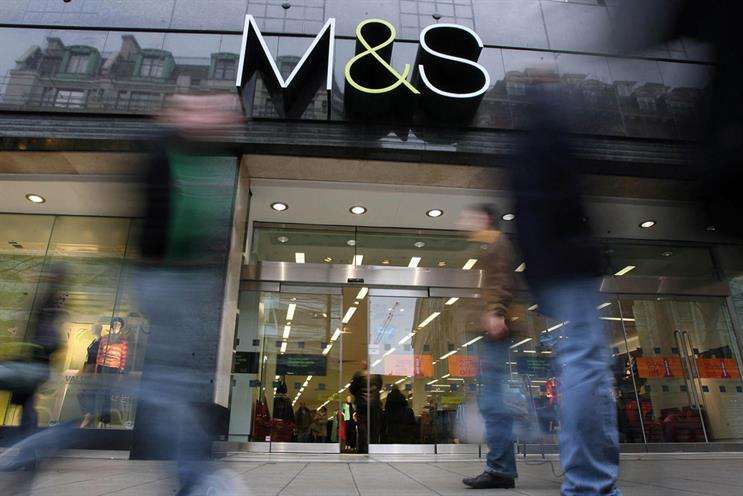
Glomb mentions: “Our latest consumer trends index also revealed that 49% of individuals are annoyed by content and offers that don’t match their interests, indicating that now is the right time and the technology is available to meet these needs on a large scale.” For example, M&S is focusing on improving its relationship marketing efforts.
Although it has been enhancing the hyper-personal touch in its customer experience through its website, app, and CRM program over the last few years, it has recently installed a custom solution in-house to strengthen customer relationships and foster future expansion. The aim is to achieve widespread hyper-personalisation, transitioning from a targeted promotions approach to one where the variety, interactions, and presentation of products are tailored to each customer, making M&S a more appealing and convenient shopping destination.
The store’s focus on tailoring experiences for customers intensified its efforts.
M&S has acquired assets such as the code and algorithms created by Thread and is now recruiting 30 of its former data scientists, software engineers, and styling and creative team members. M&S has mentioned in recent years that it has “created significant value by leveraging customer data, customising relevant offers, and using language and providing recommendations for repeat purchases and related products.” It is expected that more than 20% to 25% of all online interactions will be hyper-personalised this year, but co-chief executive Katie Bickerstaffe aims to increase this to 50% within the next two to three years.
Conclusion
The leading retailers share a system of capabilities rather than a single formula: a clear proposition, disciplined technology, resilient logistics, commercial measurement and sustained attention to the customer experience. Their position is never permanent. Scale can magnify an advantage, but it can also magnify operational cost and irrelevance when customer behaviour changes.
There’s also a new era for ecommerce, one where new disruptors like Beauty Pie are taking over the online market, and established retailers that were once dismissed by critics, like White Stuff and Quiz, are making a comeback to online expansion. Above all, it’s clear that to remain at the forefront of online retail, companies must update their ecommerce strategies – what was effective in the past may not be effective now.
The enduring commercial advantage is relevance at individual level. SwiftERM uses each retailer’s first-party behavioural and transaction data to rank the products each identifiable customer is most likely to buy next and determine the appropriate send time. This is distinct from segmentation, generic recommendations and campaign-led personalisation: the output is an autonomous product selection for each individual, delivered through the retailer’s existing email platform. For retailers with broad catalogues and established customer databases, that capability turns accumulated customer evidence into additional revenue without adding another manual campaign workload.
The published top-100 dataset
winners at ecommerce: the current operational framework
winners at ecommerce can now be considered through SwiftERM’s autonomous individualisation. Product relevance is recalculated for each identifiable customer from that customer’s own behavioural and transactional evidence, rather than being assigned by a fixed segment, campaign or predetermined journey. This distinction matters because an individual’s interests can change between visits, purchases and periods of inactivity. A current decision therefore needs current evidence.
SwiftERM evaluates the products that are becoming most relevant to each person and applies that decision autonomously. The operating model does not depend on a marketer continually creating segments, selecting products or scheduling another campaign. It is designed to use first-party behavioural and transactional signals already associated with an identifiable customer, so the decision remains specific to that customer rather than a broad cohort.
For winners at ecommerce, the practical test is not whether a retailer can create more rules. It is whether the system can recognise a change in an individual’s buying intention, reassess the available products and act without waiting for a manual campaign cycle. The output must remain traceable to the customer evidence and the ecommerce catalogue used to make the decision.
Implementation also needs disciplined data handling. Product identifiers, availability and customer events must remain consistent enough for relevance to be recalculated. Existing ecommerce operations should retain control of catalogue truth, order truth and customer permissions. Autonomous individualisation then operates within those established boundaries instead of inventing a parallel customer record or an ungoverned product feed.
The commercial value of winners at ecommerce should be assessed through observed customer response, orders and turnover, not through the volume of campaigns produced. That keeps attention on whether product selection becomes more useful to the individual and whether the retailer captures demand that would otherwise remain unrecognised. It also separates autonomous decision-making from conventional automation that simply executes a previously written rule faster.
This current framework preserves the original article’s subject while bringing its explanation into line with SwiftERM’s present capability: one identifiable customer, individually recalculated product relevance, and an autonomous decision made from that person’s own changing evidence. The same principle applies as catalogue choice, customer behaviour and commercial conditions continue to change over time.
In operational terms, the retailer retains the commercial context while the software performs the individual calculation. That division is important: the catalogue and customer record remain governed business assets, while product selection responds continuously to evidence rather than to a static assumption made when a campaign was first configured.
References
- Daily Mail Online
- Amazon.co.uk
- Glamour UK
- Claire's
- Www.thetimes.co.uk
- Depop
- John Lewis & Partners
- PrettyLittleThing
- The Body Shop®
- ALLSAINTS
- LOOKFANTASTIC
- Oh Polly UK
- Flannels
- Motelrocks.com
- Cult Beauty
- Hobbycraft
- HELLO! US Edition
- Trainline
- Fortnum & Mason
- Gumtree
- Public Desire UK
- Dolce&Gabbana Online Store
- Next Official Site
- Bear®
- Kick Game
- Boohoo
- Days Of The Year
- Vision Direct UK
- TeachMeAnatomy
- Shop Online At Selfridges
- Chi Chi London
- River Island
- House & Garden
- Pandoraâ„¢ UK
- Tatler
- Lisa Eldridge
- Woman &
- Volkswagen UK
- Notonthehighstreet.com
- Waterstones
- Interflora
- Marie Claire UK
- House Of Fraser
- GoodTo
- Liberty
- Warhammer
- Reiss
- Wickes
- Barbour
- Free Student Discounts
- Very
- Sainsbury's
- Creative Bloq
- The Royal Mint
- The North Face
- Happy Beds
- Red Magazine
- Lakeland
- Harvey Nichols
- Rough Guides
- What Hi
- Monica Vinader
- Space NK
- Woman &
- Alexander McQueen
- Wayfair.co.uk
- Papier
- Currys
- Fred Perry
- Dulux
- Ocado
- KILLSTAR – UK Store
- Holland & Barrett
- Thompson & Morgan
- ALDI UK
- Center Parcs
- Folio Society
- Base
- Yours Clothing
- Wrexham AFC
- Bravissimo
- GAME
- Coast
- To Accessorize Global
- Hotel Chocolat
- WHSmith
- Ticketmaster UK
- NADINE MERABI
- Dreams
- London Gatwick Airport
- New Balance
- Dune London
- Carpetright
- Abbott Lyon
- Victoria Beckham UK
- Zalando UK
- Warehouse
- TOAST
- Joules®
- SilkFred