

What this means for individual customer decisions
Consumer theories explain useful patterns, but an ecommerce sale still belongs to one person choosing among particular products at a particular moment. Individual evidence is more commercially useful than treating a theory or segment as the decision itself.
SwiftERM applies that principle to first-party behavioural and transaction evidence. It continually ranks relevant SKUs for each identifiable customer, determines likely next-purchase timing and supplies the selection through the retailer’s existing ecommerce and email systems. The result is judged by additional attributable turnover, not by the volume of messages sent.
A useful commercial reading separates the underlying development from the claims that surround it. Retailers need to know what evidence is available, which customer decision it can improve, whether the improvement can operate across the whole catalogue and how the incremental result will be established. Without those tests, an interesting trend may remain operationally irrelevant. With them, it can become a repeatable source of better product relevance and additional purchasing.
That distinction also protects measurement. Opens, clicks, sessions and attributed orders can describe activity, but none independently proves that a sale would not otherwise have happened. A credible assessment compares like with like, keeps the commercial objective visible and considers margin, availability, customer history and timing alongside headline conversion. It should also recognise uncertainty rather than turning a market average into a promise for one retailer.
For established ecommerce businesses, the practical opportunity lies in using evidence already created by customer behaviour. Product views, purchases, recency, frequency, sequence and changing affinities can indicate what is becoming relevant to each person. Autonomous individualisation makes those signals useful without requiring another campaign calendar or a growing team of operators. The work is continuous because customers, catalogues and circumstances continue to change.
The appropriate next step is therefore a bounded test against the retailer’s own trading reality. A free trial can reveal whether the approach produces genuinely additional turnover while allowing the business to examine implementation, attribution and operational demands directly. That is more dependable than treating a general forecast, technical label or isolated benchmark as evidence of the result a particular company will achieve.
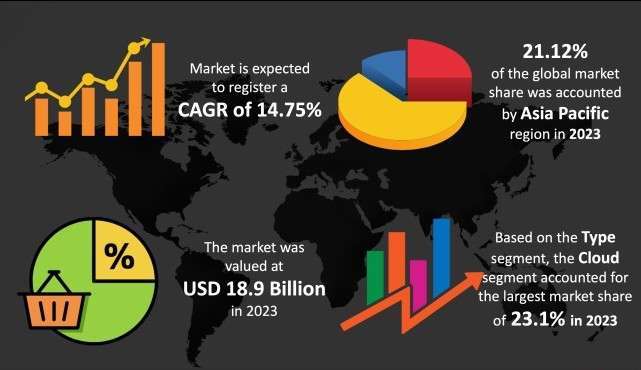
In 2023, the global hyper-personalisation market size was 18.9 billion USD and it is expected to reach 74.82 billion USD within 10 years, with a compound annual growth rate (CAGR) of 14.75% from 2023 to 2033, according to the latest report from The Brainy Insights.
The hyper-personalisation market report provides sufficient and comprehensive information on the market introduction, status and trends in the market, opportunities and challenges in the market, industry chain, competition analysis, company profiles trade statistics etc. It provides a detailed and all-inclusive analysis of each market segment, application, player, main region and sub-division of major countries and sometimes end users, channels, technology and other information individually customised before order confirmation.
Progress in intelligent gadgets is a significant element that could open up profitable chances for devices focused on hyper-personalisation in the marketplace. For instance, in February 2023, Infosys launched Infosys Equinox Studio, designed to handle customer experience management with the least amount of IT effort required for deployment, modification, and development. The launch of Infosys’ latest innovation is expected to assist the company in cutting costs while enabling the creation of personalised experiences in real-time.
A recent comprehensive report by SwiftERM lists all the leading 30 companies advocating their hyper-personalisation software and identifies the distinctions between them.
Key Insights on Hyper-Personalisation Market
During the projected period, North America is projected to hold the largest market share, representing 43.23% of the overall market. Meanwhile, Europe is expected to experience the fastest growth rate during this time. North America has become the leading market for the global hyper-personalisation sector, making up 43.23% of the total market.
This is due to technological progress, increasing consumer awareness of sophisticated features, and the involvement of major market participants. On the other hand, Europe is predicted to show the highest growth rate during this period. The early adoption of digital technologies and the emphasis on each individual’s personal experiences have also played a significant role in the expansion of the hyper-personalisation market in this area. It is delivering exactly what the individual wants at a time priced to them, autonomously without marketing influence or promotion.
Cloud has taken over the industry, leading with the largest market income of USD 4.36 Billion in 2023. Cloud has led the industry, making up 23.1% of the entire market. An increase in awareness about linking customers with brands worldwide, along with the quick uptake of the technology, has boosted the demand for Cloud in the Hyper Personalisation Market.
Ecommerce dominates the hyper-personalisation market, with a revenue of $5.01 Billion. It is expected to grow at the fastest rate in the world due to the growing adoption of technology, which makes tasks easier and provides long-term growth opportunities in the coming years, as it delivers relevancy and sustainability.