
Various crisis in the past few years has hit hard in many wine producing areas. People have preferred less expensive products, making their purchases on the occasion of promotional sales, and increasingly more often resorting to sites that cater for their personal tastes and offer the most relevant products to them.
Alongside price sensitivity, consumer hyper-personalisation now shows greater attention for the product׳s quality characteristics, choosing wine produced using techniques that respect the environment or are expressions of the variety and value of the region they are from. These differentiated behaviours within the general picture point out a complex system in which consumers orient their choices in a non-homogeneous manner.
Wine witnesses two opposing phenomena: the increase of mass-produced wine, and the specialisation towards narrow markets, characterised by excellent product quality in terms of importance of terroir, appellation, and geographical identity.
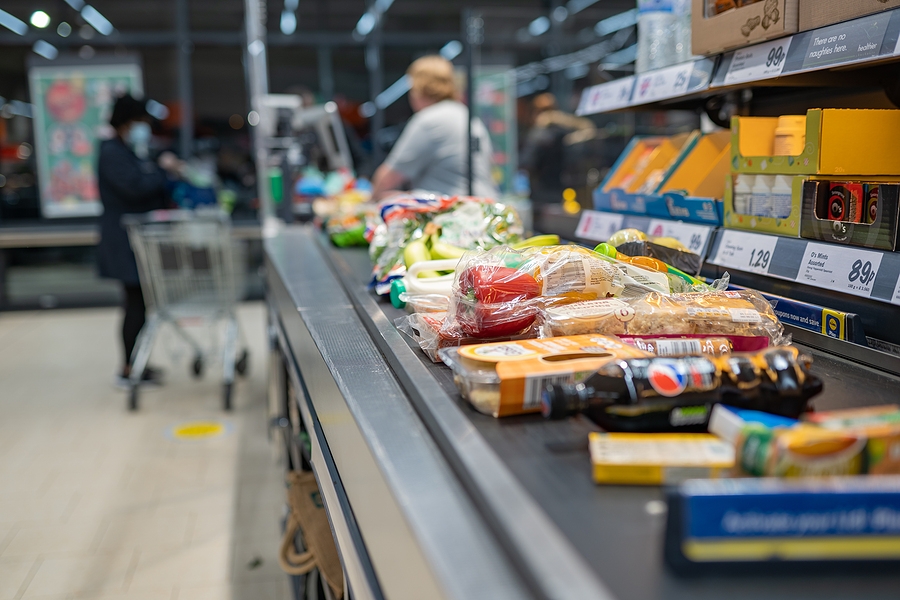
These tendencies are also reflected in the sales channels preferred by consumers. In this regard, the retail sales figures of wine in the principal consumer countries show that most purchases are made at large grocery stores and discount stores, where the prices are more competitive than in other shops.
Many retailers affirm that the factors that determine the purchase of wine in supermarkets are represented not only by prices, but also by the wide range of available products, the ease and efficiency of purchase, and the quality of the products. The trick is to identify each buyer’s predilections and ensure they are fulfilled. The advent of AI has enabled this to simply be achieved through hyper-personalisation software.
This link explains the distinctions between the top 30 vendors.
DTC sales have taken this to a new level, and across the globe online wine purchase is set to overtake tradition sources to purchase, especially as the majority of consumers have yet to award their affinity and loyalty to a particular site, so is still in it’s infancy.

Wine attributes and purchase decisions
Various studies have confronted the theme of wine attributes that influence consumer purchasing behaviour. Price constitutes a decisive choice criterion, as well as an important sign of quality. The influence of price on choice is all the more marked for consumers who have a low involvement with wine.
Moreover, several authors report that this attribute can be a strong choice driver independently of the presence of other factors: given a certain situation of consumption, the consumer indeed seems to decide the price bracket for his/her choice even before purchasing.
Various reports suggest that there are other elements connected with price that influence consumer choice. We are referring, in particular, to promotional activities, which are sales strategies widely diffused especially in ecommerce.
These are implemented using defining different systems, such as the presence of particular signs on the label, or the depth of detail divulged on your site. Often the more information you offer the greater the rate of purchase. Not only does greater detail increase it’s SEO value thereby being seen by more consumers, but when found it offers an education enjoyed, that they would otherwise deny being provided.
The purchase of wine during a promotional sale is associated with consumers who have a low involvement with wine, as price is an important purchasing incentive. Furthermore, the choice of a product on promotional sale is associated with consumer loyalty to this very product brand: the consumers most loyal to the brand tend to stock up on their favourite brand during promotional sales and wait for another promotional sale of the brand, at the same sales outlet or at another, to purchase it again.
Given the strong tie that exists between wine quality and region in the broadest sense of the term, the country of origin constitutes a very important product attribute. Numerous authors indeed point out that it is the principal driver in wine choice, and that the presence of the wine growing region on the label increases the consumer׳s trust in the overall product quality, and indeed in turn retailer.
The grape variety is also a product attribute that influences the consumer׳s decision to purchase wine. The importance this characteristic has on choice, however, differs according to the territorial context. In fact, in “New World” markets, it seems to replace the country of origin while in Europe, the weight of grape variety seems to be less than that of the denomination of origin.
In this regard, several authors claim that the greater the consumer’s involvement with wine, the greater the importance of the denomination. Other attributes connected to the type of wine are colour and whether it is still or sparkling.
Brand reputation makes it possible to identify the product via a connection with the producer or with one׳s own consumption experiences. It is a quality indication, but by itself, it may not prove to be a cue strong enough to orientate choice, as information like price or country of origin overrides it.
The same can be said for brand loyalty, which though constituting a shortcut in product choice, does not prove decisive, as it has been shown that the consumer may change brand so as not to forfeit other characteristics. Moreover, the consumer’s behaviour towards a brand is strongly tied to the product market share, which means he/she is oriented towards wines with higher market shares.
Even the bottle format can contribute to guiding choice. Several authors have indeed shown that in the choice of non-premium wines, the packaging also plays an important role. It has recently been shown that the consumer draws useful quality information about the product simply from the weight of the bottle. In this regard, a positive correlation has been pointed out between wine container weight, price, and quality of wine.
Discussions and conclusions
Generally speaking, an overall effect exerted by the various predictors on the performance of the wines sold can be outlined. The variables of price and promotion volume always have a positive influence on wine performances, accentuating the positivity of good results for firms with positive performances, and attenuating the negative results for the other firms.
The discount variable instead always hurts performance. This means that high discount percentages are always associated with negative performances of wines. Better to stick to price-points (levels) and service these as different entities.
The variables of diffusion and specialisation have traditionally displayed a peculiar trend, differentiating their effect among the classes. The Internet has been a protagonist to change, as it transcends traditional values, with consumers being ever more educated and discerning.
While the former predictor increases positivity in the case of a product that shows good performances and intensifies negativity in the case of bad performances, specialisation seems to serve as a shock absorber. It indeed attenuates both the negative performances and positive trends. Finally, the producer׳s market quota, however significant it may be, displays a positive effect on the performances of wines.
Evidence: Office for National Statistics retail evidence.
Further evidence and related SwiftERM analysis
wine: the current operational framework
wine can now be considered through SwiftERM’s autonomous individualisation. Product relevance is recalculated for each identifiable customer from that customer’s own behavioural and transactional evidence, rather than being assigned by a fixed segment, campaign or predetermined journey. This distinction matters because an individual’s interests can change between visits, purchases and periods of inactivity. A current decision therefore needs current evidence.
SwiftERM evaluates the products that are becoming most relevant to each person and applies that decision autonomously. The operating model does not depend on a marketer continually creating segments, selecting products or scheduling another campaign. It is designed to use first-party behavioural and transactional signals already associated with an identifiable customer, so the decision remains specific to that customer rather than a broad cohort.
For wine, the practical test is not whether a retailer can create more rules. It is whether the system can recognise a change in an individual’s buying intention, reassess the available products and act without waiting for a manual campaign cycle. The output must remain traceable to the customer evidence and the ecommerce catalogue used to make the decision.
Implementation also needs disciplined data handling. Product identifiers, availability and customer events must remain consistent enough for relevance to be recalculated. Existing ecommerce operations should retain control of catalogue truth, order truth and customer permissions. Autonomous individualisation then operates within those established boundaries instead of inventing a parallel customer record or an ungoverned product feed.
The commercial value of wine should be assessed through observed customer response, orders and turnover, not through the volume of campaigns produced. That keeps attention on whether product selection becomes more useful to the individual and whether the retailer captures demand that would otherwise remain unrecognised. It also separates autonomous decision-making from conventional automation that simply executes a previously written rule faster.
This current framework preserves the original article’s subject while bringing its explanation into line with SwiftERM’s present capability: one identifiable customer, individually recalculated product relevance, and an autonomous decision made from that person’s own changing evidence. The same principle applies as catalogue choice, customer behaviour and commercial conditions continue to change over time.
In operational terms, the retailer retains the commercial context while the software performs the individual calculation. That division is important: the catalogue and customer record remain governed business assets, while product selection responds continuously to evidence rather than to a static assumption made when a campaign was first configured.