

The ecommerce market is growing incredibly fast every year. Its value and importance are becoming more and more impressive. New ecommerce trends emerge at an overwhelming pace. Here we have gathered all the trends for you to keep up with so that you can match (or, ideally, outdo!) your competition.
In 2019 the global ecommerce market has already crossed the US$2 trillion threshold. With US$634 billion in sales in 2018, China is number one in ecommerce and the report shows it will stay in the lead through 2023.
A shift in purchasing power from the U.S. and Europe to China and Southeast Asia has begun, fueled by the growing number of Asian consumers gaining access to ecommerce due to growing purchasing power and internet penetration, especially on mobile devices.
But what are the trends that you will find in the whole global ecommerce market in 2021?
Ecommerce trends: 1. Mobile Shopping & Mobile Payments
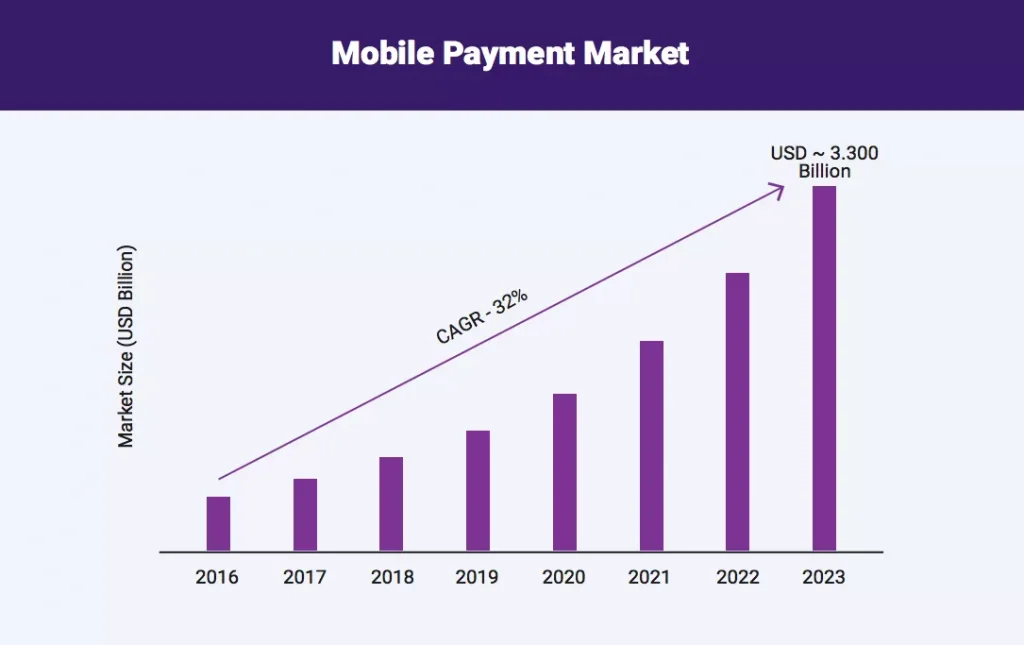
Mobile commerce has been constantly on the rise since the advent of smartphones. It’s estimated that four out of five Americans shop online and more than 50% of them do it using a mobile device. In Europe, these numbers are even higher – 64% of Europeans shop online and 55% do it on mobile devices and this trend will likely stay hot in 2021 for at least two reasons.
Firstly, an average American uses a smartphone for more than four hours per day and secondly, ecommerce businesses do their best to optimise apps and mobile-friendly websites so that their clients receive the best mobile experience possible.
Both tech giants and newly emerged ecommerce businesses do their best to improve user experience and facilitate mobile payments, including using e-wallets. China is the leader – both WeChat and Alipay have over 1 billion users each.
2. Chatbots: a new way to communicate with your customers
By 2025, the global chatbot market is expected to generate revenues of over one thousand million dollars. And ecommerce represents a big slice of this. Chatbots will continue to be one of the biggest ecommerce trends going into 2021. The global chatbot market has attained a massive 24.3% Compound Annual Growth Rate. 45% of end users consider chatbots their primary choice for customer service inquiries.
Voice Commerce
Voice assistants like Apple’s Siri, Amazon’s Alexa, and Google’s Assistant are growing more and more popular. It’s predicted to be 8 billion devices with voice assistants in them (including smartphones) by 2023. Voice shopping is expected to grow to 40 billion by 2022.
Yet it seems that both big and small ecommerce players still don’t understand their potential – only 11% of smart speaker owners in the US use them to buy products.
Making an order using voice assistants is intuitive, and hands-free, it doesn’t require a mouse or a keyboard and is perfect for multitaskers. Voice technology still needs more development and support for more languages and accents but once it’s improved, ecommerce will strive to implement voice search and voice assistants to the customer journey they offer.
4. Headless Ecommerce
Headless commerce systems are designed for compatibility with a range of front-end systems: desktop and mobile sites, third-party platforms like Amazon and Instagram, voice assistants (like Amazon Echo), and so on.
Headless commerce also allows retailers to manage all of their inventory and orders from a single, central platform. This significantly reduces the time it takes to perform multi-channel updates, while simultaneously improving the overall user experience.
Headless commerce is important for two main reasons.
First, headless commerce holds the potential to significantly cut down on staff time and resources associated with managing multiple ecommerce channels.
Second, headless commerce allows retailers to quickly and cost-effectively reach new markets and channels.
Essentially, headless commerce allows you to bring core operational systems – supply chain management, customer management, financial management, etc. – under one roof. Furthermore, headless commerce enables you to connect customer touchpoints to this core operational architecture without any code crossover, allowing you to make changes quickly.
5. AI and Machine Learning
AI, in a nutshell, entails making a technology understand repetitive human habits. We can’t stress enough how much the ecommerce market can gain from understanding customer needs and serving them.
AI and Machine Learning remain the hottest trends in ecommerce. No wonder – they’re giving marketers a powerful weapon – never before have both automated and personalized shopping experiences been as possible as now, thanks to AI machine learning.
Although it’s far from being a novelty, machine learning has been growing in popularity in ecommerce relatively recently. Now, it’s mostly used in search and product recommendations.
Before modern algorithms emerged, product recommendations were done mostly manually which was not only inefficient but also prone to error. Now, recommendations can be made automatically and they match customers’ preferences about brands or colour, gender, budget, and many other factors.
In product search, machine learning can allow displaying much more relevant results, also based on a consumer’s profile.
Hyper-personalisation solutions, using AI machine learning technologies, identify consumers’ future behaviour – specifically their imminent likely purchases, ranking every SKU by the greatest likelihood of that individual consumer to purchase from all you have listed, in order of greatest likely buying propensity. In other words, the ones that are most relevant to their needs at that moment in time.
It presents them to that individual at exactly the right moment, thereby maximising that individual’s customer lifetime value CLV potential. (i.e. Likelihood to Purchase, Discount Affinity, Likelihood to Churn etc). Hardly surprising is ranked at the top of all marketing disciplines for ROI.

6. Ecommerce Conversion Optimisation
Unless you operate in a niche, having an ecommerce business means dealing with a highly competitive market. That’s why ecommerce optimisation is a key – it allows to stand out from the competitors, build trust, offer better customer experience and finally, to have higher conversions.
The average ecommerce conversion rate is about 2.27% but it can vary a lot depending on the country and even devices people use to do the shopping. That’s why instead of comparing your business to average numbers, you should rather track your conversion rates in Google Analytics and experiment to increase them.
In the past, ecommerce directors had to decide between major redesigns or conversion rate improvement. But ecommerce redesign process is often costly and conversion rate improvement is often not enough.
Ecommerce optimisation is the solution here. It’s a constant online store development that provides a guaranteed revenue boost. Not sure how it works? Take a look at Amazon.com. You haven’t seen them doing a major redesign, however, they are constantly and endlessly improving.
So if you’re tired of sluggish IT improvements, but don’t want to invest in pricey redesigns, ecommerce optimisation is a way for you.
7. The Rise of Virtual Reality
VR, also known as computer-simulated reality, makes us feel as if we’ve entered a simulated environment. Virtual reality will create an even more personalized shopping experience for your customers.
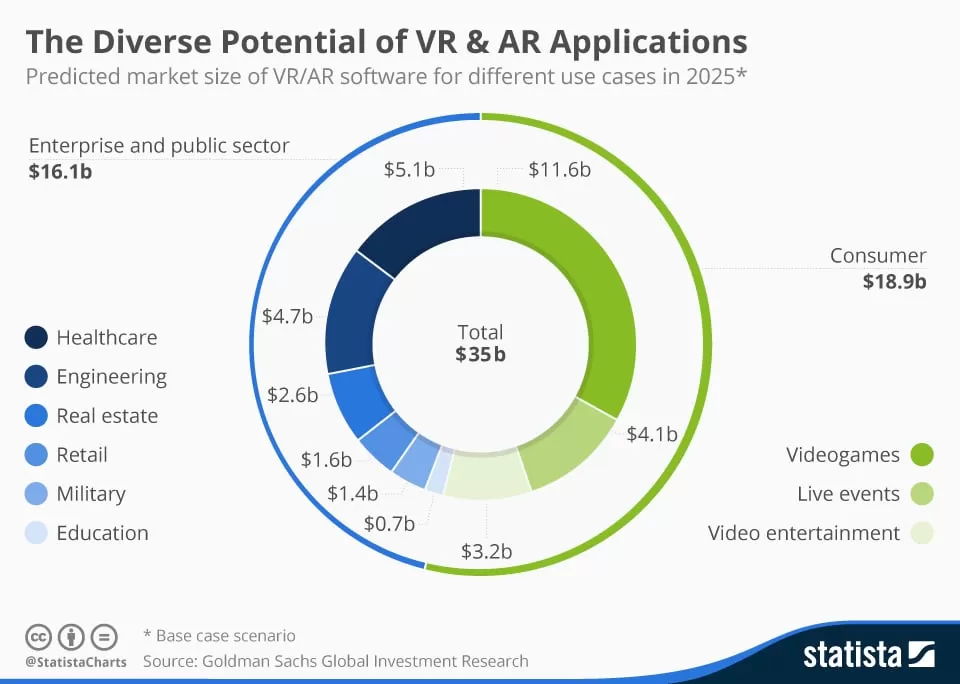
Because Amazon alone features 200 VR headsets, as well as 450 startups, are defined as VR technology companies on AngelList, VR and AR are a real ecommerce opportunity. For example, users can ‘visit’ virtual showrooms and visualise the products in real life.
Ecommerce trends: the current operational framework
Ecommerce trends can now be considered through SwiftERM’s autonomous individualisation. Product relevance is recalculated for each identifiable customer from that customer’s own behavioural and transactional evidence, rather than being assigned by a fixed segment, campaign or predetermined journey. This distinction matters because an individual’s interests can change between visits, purchases and periods of inactivity. A current decision therefore needs current evidence.
SwiftERM evaluates the products that are becoming most relevant to each person and applies that decision autonomously. The operating model does not depend on a marketer continually creating segments, selecting products or scheduling another campaign. It is designed to use first-party behavioural and transactional signals already associated with an identifiable customer, so the decision remains specific to that customer rather than a broad cohort.
For Ecommerce trends, the practical test is not whether a retailer can create more rules. It is whether the system can recognise a change in an individual’s buying intention, reassess the available products and act without waiting for a manual campaign cycle. The output must remain traceable to the customer evidence and the ecommerce catalogue used to make the decision.
Implementation also needs disciplined data handling. Product identifiers, availability and customer events must remain consistent enough for relevance to be recalculated. Existing ecommerce operations should retain control of catalogue truth, order truth and customer permissions. Autonomous individualisation then operates within those established boundaries instead of inventing a parallel customer record or an ungoverned product feed.
The commercial value of Ecommerce trends should be assessed through observed customer response, orders and turnover, not through the volume of campaigns produced. That keeps attention on whether product selection becomes more useful to the individual and whether the retailer captures demand that would otherwise remain unrecognised. It also separates autonomous decision-making from conventional automation that simply executes a previously written rule faster.
This current framework preserves the original article’s subject while bringing its explanation into line with SwiftERM’s present capability: one identifiable customer, individually recalculated product relevance, and an autonomous decision made from that person’s own changing evidence. The same principle applies as catalogue choice, customer behaviour and commercial conditions continue to change over time.
In operational terms, the retailer retains the commercial context while the software performs the individual calculation. That division is important: the catalogue and customer record remain governed business assets, while product selection responds continuously to evidence rather than to a static assumption made when a campaign was first configured.